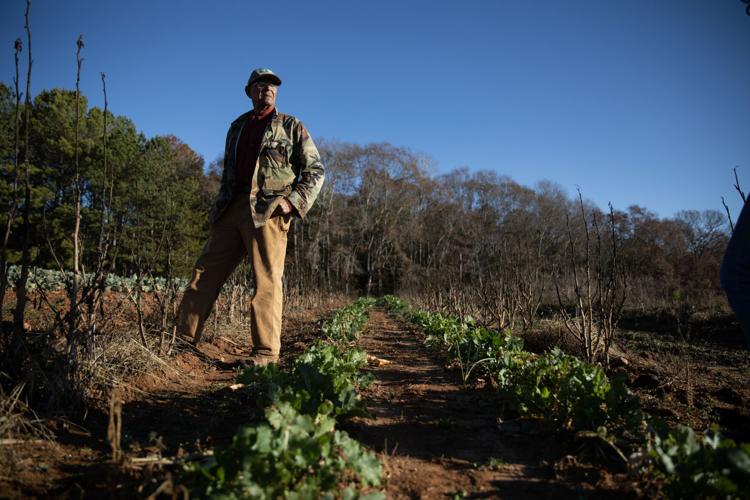
GREENVILLE — Rural farm land across South Carolina in areas such as Johns Island, Fairfield County and along Lake Greenwood is most threatened by intense gentrification pressures, according to a new mapping tool from Furman University.
Farms across the state are essential for producing locally sourced food and feed for livestock, both for Palmetto State residents and international export. From soybeans grown in the Pee Dee to leafy greens in the Lowcountry, South Carolina’s agricultural products supply a global food chain.
But as developers build more subdivisions and more warehouses spring up along major highways, the state’s agricultural land continues to shrink. Urban growth is driving up property values and market pressure on farms.
An added stressor: Higher-income remote workers looking for natural amenities like state parks and lakes are drawn to rural areas, too. All these factors combined can force families to sell generational farmland and threaten food security, Ken Kolb, a sociology professor with Furman University, told The Post and Courier.
“Newcomers are coming in that maybe don’t know an area’s history, and this has implications for small farmers,” Kolb said.
Kolb worked with the Shi Institute Applied Research Team to develop a GIS-based tool that analyzes market pressures on rural farmland over time, which can help people spot areas most at risk of displacement and development.
The goal is to give state or local agricultural agents a method of prioritizing areas that need focused help and assisting farmers in making informed decisions about what to do with their land, he said.
Unsurprisingly, data from the past decade or so shows agricultural land around major metro areas such as Greenville, Columbia, Charleston and Myrtle Beach is most threatened by gentrification, meaning land values are outpacing income levels.
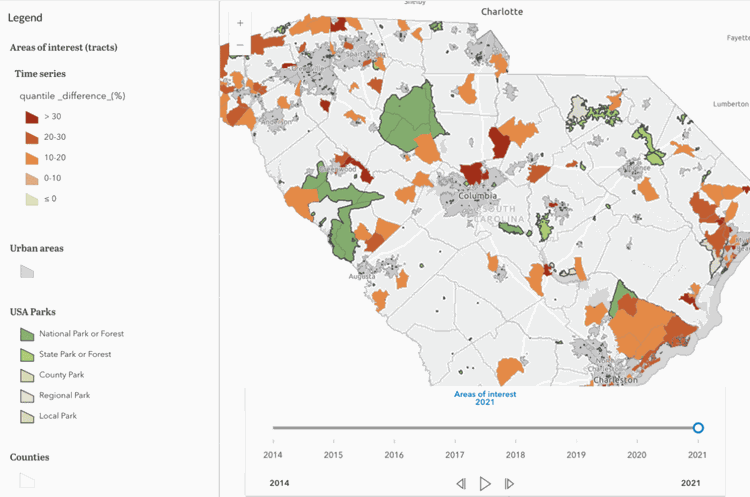
There are also spots like Longtown, an unincorporated community in Fairfield County, and Campobello in Spartanburg County where there is a divergence of housing prices and income of greater than 30 percent.
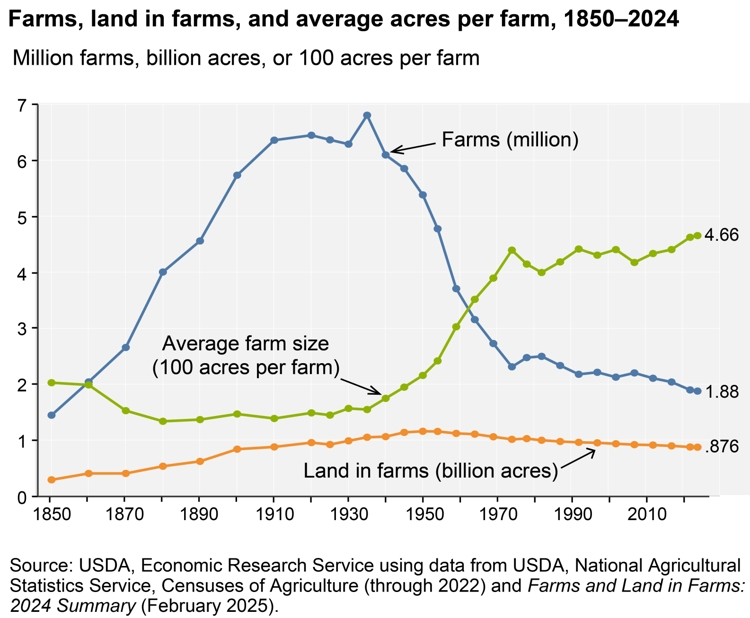
The research underscores a troubling national trend showing farmland continues to decline across the country. In the most recent U.S. Department of Agriculture survey, there were 1.88 million U.S. farms in 2024, down 8 percent from the 2.04 million in the 2017 Census of Agriculture.
There’s no question that losing that land is bad for food supply. But with gentrification comes opportunity. As farming becomes increasingly more consolidated and corporate farming takes over a larger market share, the prospect of selling land to a housing subdivision developer “may be terrifying, or it may be gratifying,” Kolb said.
“You know, maybe you’re looking for an opportunity to cash out, or maybe you’re really upset because you’re losing a familiar space. It can depend,” he said.
South Carolina legislators are trying to address the state’s land loss problem by offering incentives to farmers to adopt conservation easements — a legal agreement that permanently limits how land can be used to protect its agricultural value, no matter who owns it.
In Congress, lawmakers have also introduced bills to restrict how much American farmland foreign adversaries can own or buy because of concerns about hostile attempts to take over the U.S. food chain. China holds only about 1 percent of all foreign-owned land in the United States, while Canada owns nearly one-third, according to USDA.
Along South Carolina’s coast, in particular, there are challenges with understanding just how much land is at risk and protecting it. One reason there could be a gap between land pricing and income is because many retirees own second homes there.
There is also more heirs’ property along the coast — land that is owned jointly by a dead person’s descendants without a clear, formal transfer of ownership.
“That’s just another layer that puts land at risk, when you have all this pressure,” said Mike Winiski, who helped design Furman’s project. “It paints this complicated picture.”
To mitigate rural gentrification, the Furman team recommended creating incentives for farmers to keep and invest in their land; supporting organizations that help protect heirs’ property, such as the Center for Heirs Property in SC and the Farmland Access Legal Toolkit; advocating for policies that prioritize agricultural preservation and limit speculative development; and working with local governments, nonprofits and community members.
The mapping tool is available at shi.institute/research/rural-change-diagnostic-screen.